Map the service
Mapped the breeding cycle and working conditions to expose critical offline-to-online touchpoints.

Breeding decisions are commercial decisions.
Choosing a mating pair shapes herd quality, profitability, and long-term breeding direction. Yet breeders often had to combine experience, records, catalogues, and genetic indicators manually across multiple sources.
Working with a major Australian breed association, geneticists, and data specialists, I shaped a product direction for AI-assisted prediction. It helped breeders compare sires and explore likely offspring profiles without replacing their expertise.
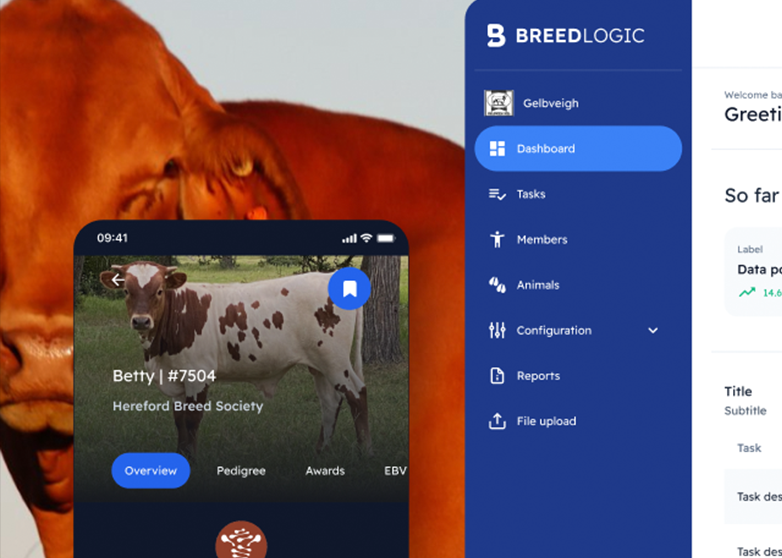
The opportunity was to turn existing EBVs and genetic signals into a more predictive mating workflow. DGV combined pedigree, phenotypic, genotypic, and SNP data so breeders could compare options against multiple goals. The core design challenge was trust: make the model useful, legible, and adjustable rather than authoritative.
Breeders were not looking for abstract “AI.” They wanted confidence that a mating choice supported their herd goals and could inform a real commercial decision. The design challenge was to make prediction usable.
Breeders understood bloodlines, phenotype, and herd direction. The difficulty was synthesising many variables at once: carcass quality, growth, fertility, calving ease, disease resistance, and profitability. Comparing sires against those goals was valuable work, but it was slow and mentally demanding.
The model could not become the answer. BreedLogic needed to surface likely outcomes, support comparison, let breeders adjust priorities, and explain the reasoning well enough to earn trust. It was decision support, not an AI recommendation engine.
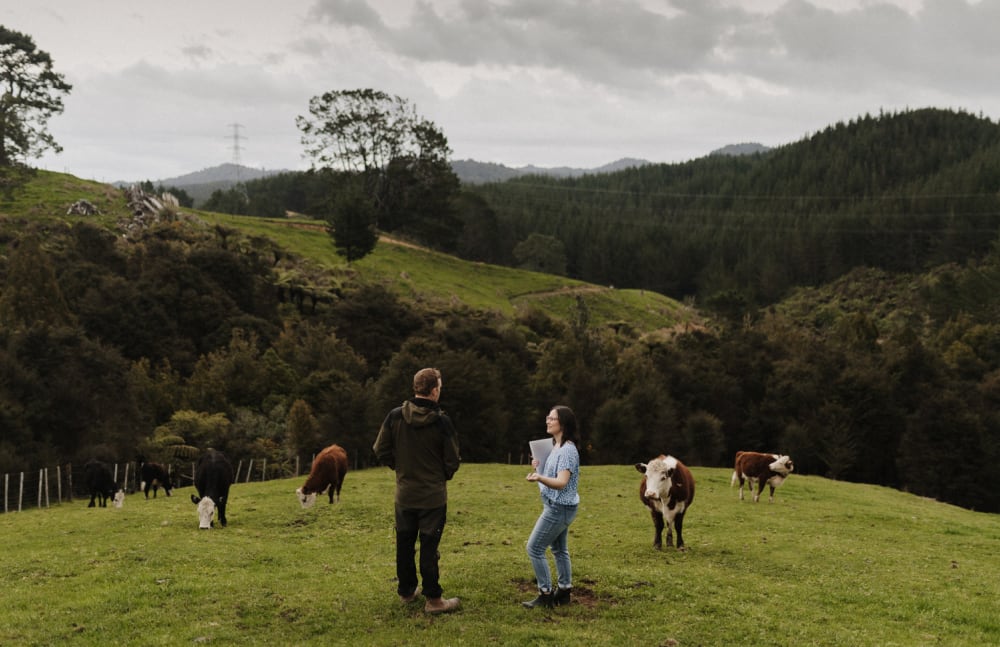
I tested that framing against real breeder contexts, including farm visits and conversations about animals, constraints, and herd direction. The research connected breeders, geneticists, and technical experts so the prediction logic and interface could support one another.
At an Armidale workshop, I brought different roles together to map the breeding cycle, expose the handoffs between them, and define what BreedLogic would need to support in practice. The workshop was structured around four activities rather than a generic ideation session.
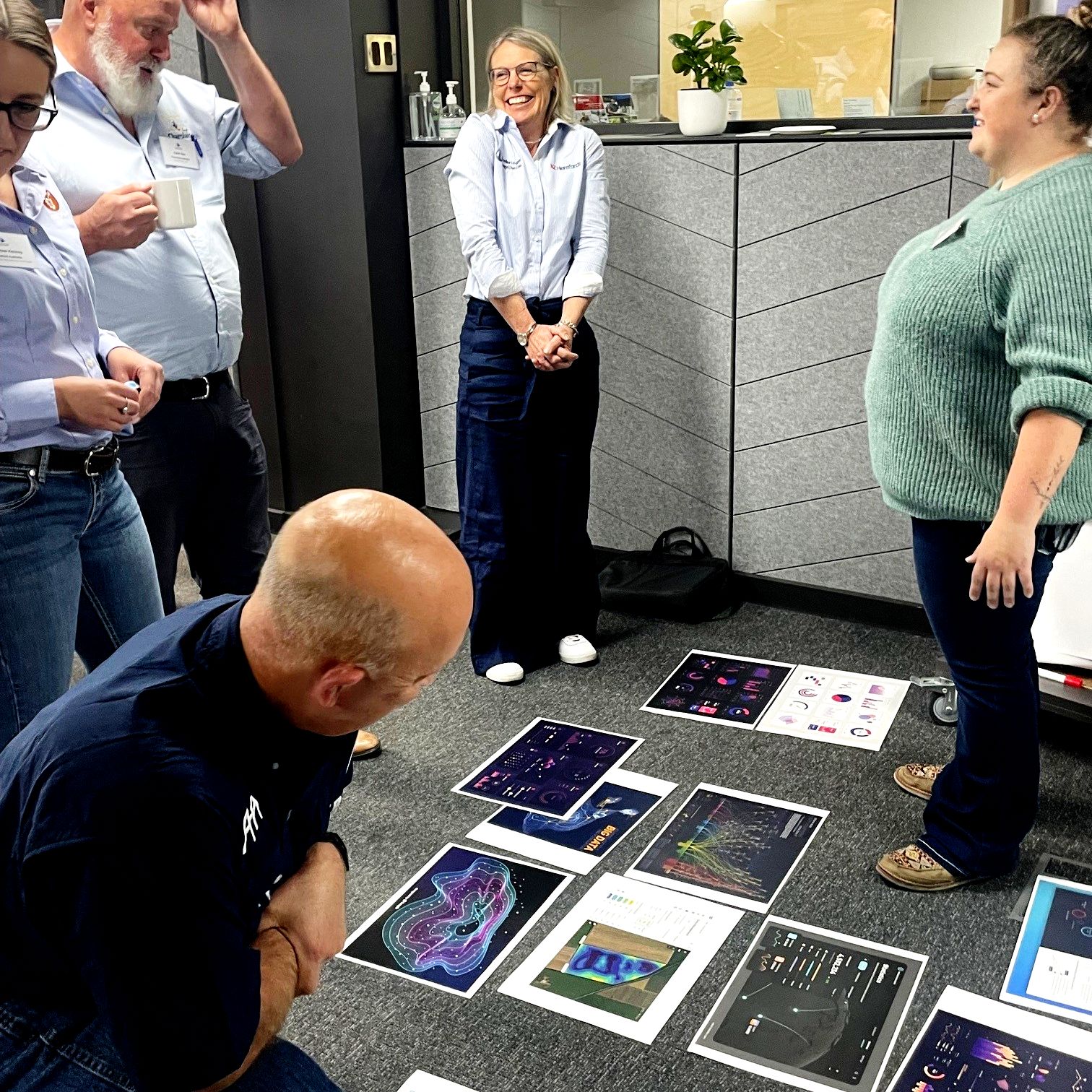
Participants compared possible data visualisations and discussed how each role would use them.
Before mapping the service, I defined the roles that would shape it. Personas made each participant’s goals, responsibilities, constraints, and decisions visible, so the workshop could move from generic feature requests to role-specific friction and functional needs.
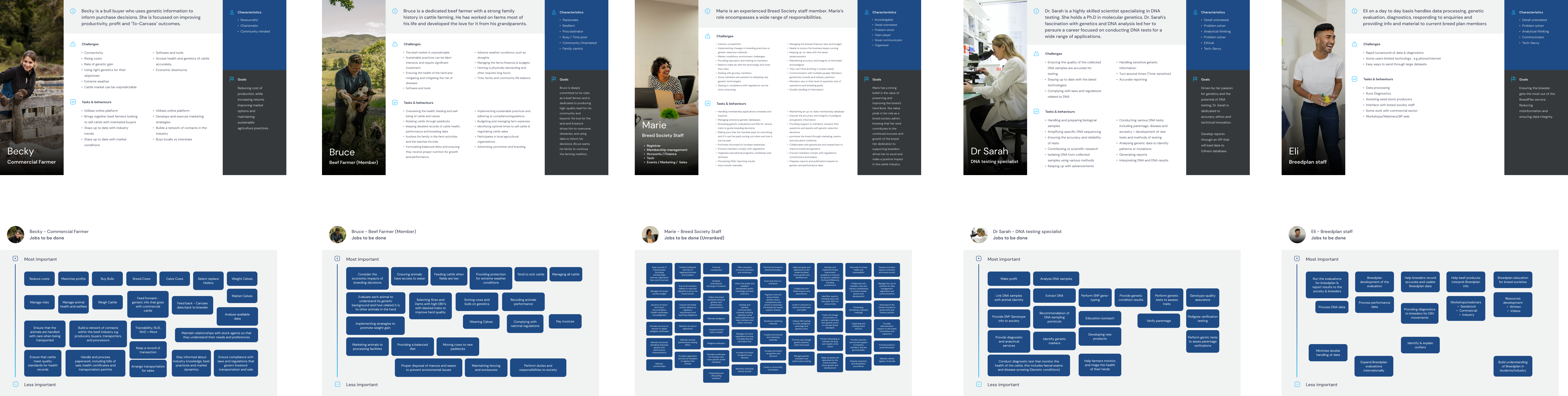
Personas established the lens for mapping the service, finding friction, and turning needs into functional requirements.
Mapped the breeding cycle and working conditions to expose critical offline-to-online touchpoints.
Surfaced handoff failures such as missing pedigree data, delayed results, and unclear approvals.
Turned role-specific pain points into user stories and a prioritised functional backlog.
Sorted pedigree, EBV, notification, search, and upload components into role-based information hierarchies.
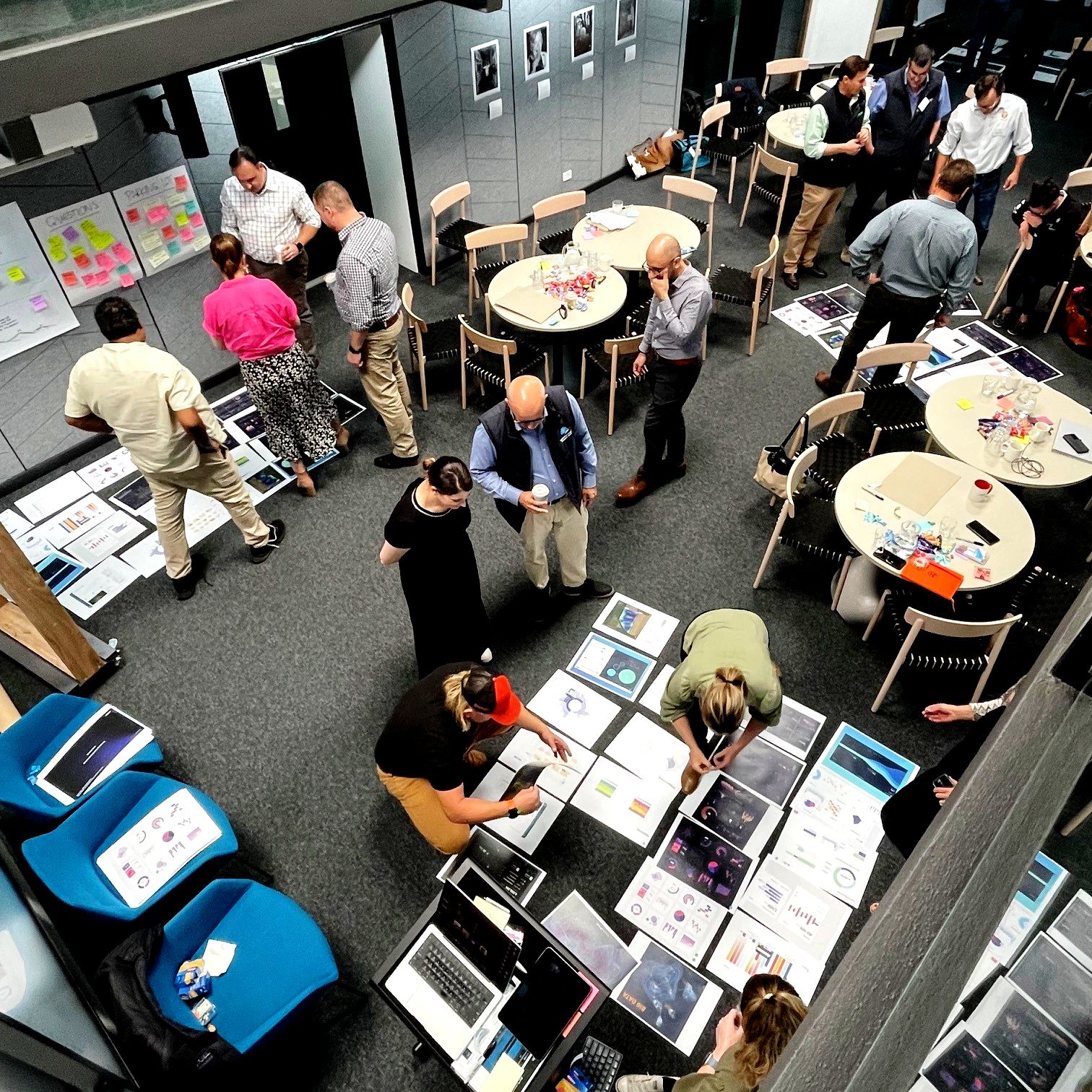
The room became a shared model of the breeding ecosystem, with teams comparing visual directions and prioritising what each role needed to see first.
The workshop gave the team a common foundation for product decisions: an ecosystem blueprint, a prioritised friction matrix, a role-based backlog, and low-fidelity dashboard direction.

Trust was the central UX challenge. Breeders wanted better prediction, but were cautious about outputs that felt opaque or overly certain.
Research showed that breeders needed comparison, not isolated scores. The UI placed predicted profiles alongside herd ranges and breeding goals so users could see likely improvements, trade-offs, and stronger pairings.
Accuracy alone was not enough. Outputs needed visible traits, ranges, and comparisons, with enough context to support interpretation without exposing unnecessary genetic detail.
I translated those principles into a practical decision flow: review a herd or animal, inspect DGV signals, compare sires against breeding goals, and assess likely improvements with less manual synthesis.
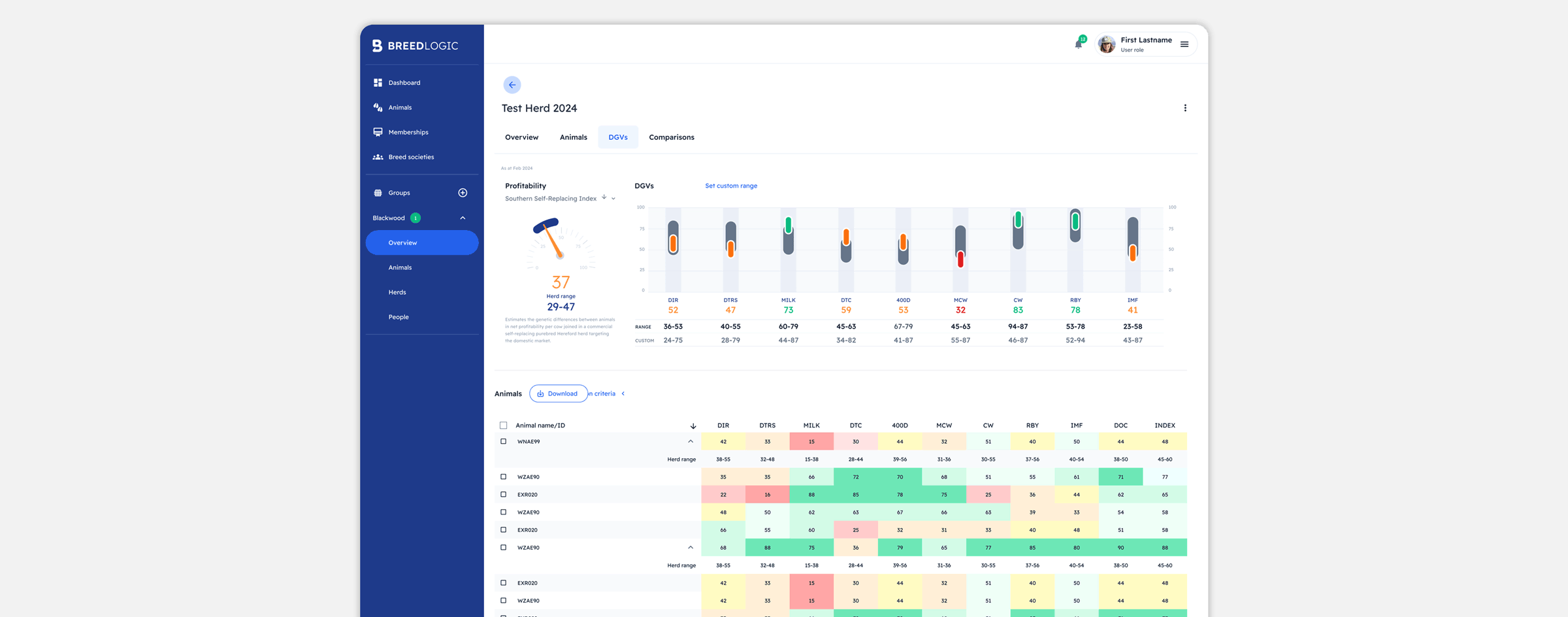
The flow starts with herd-level patterns, then moves into individual performance and pairing decisions.
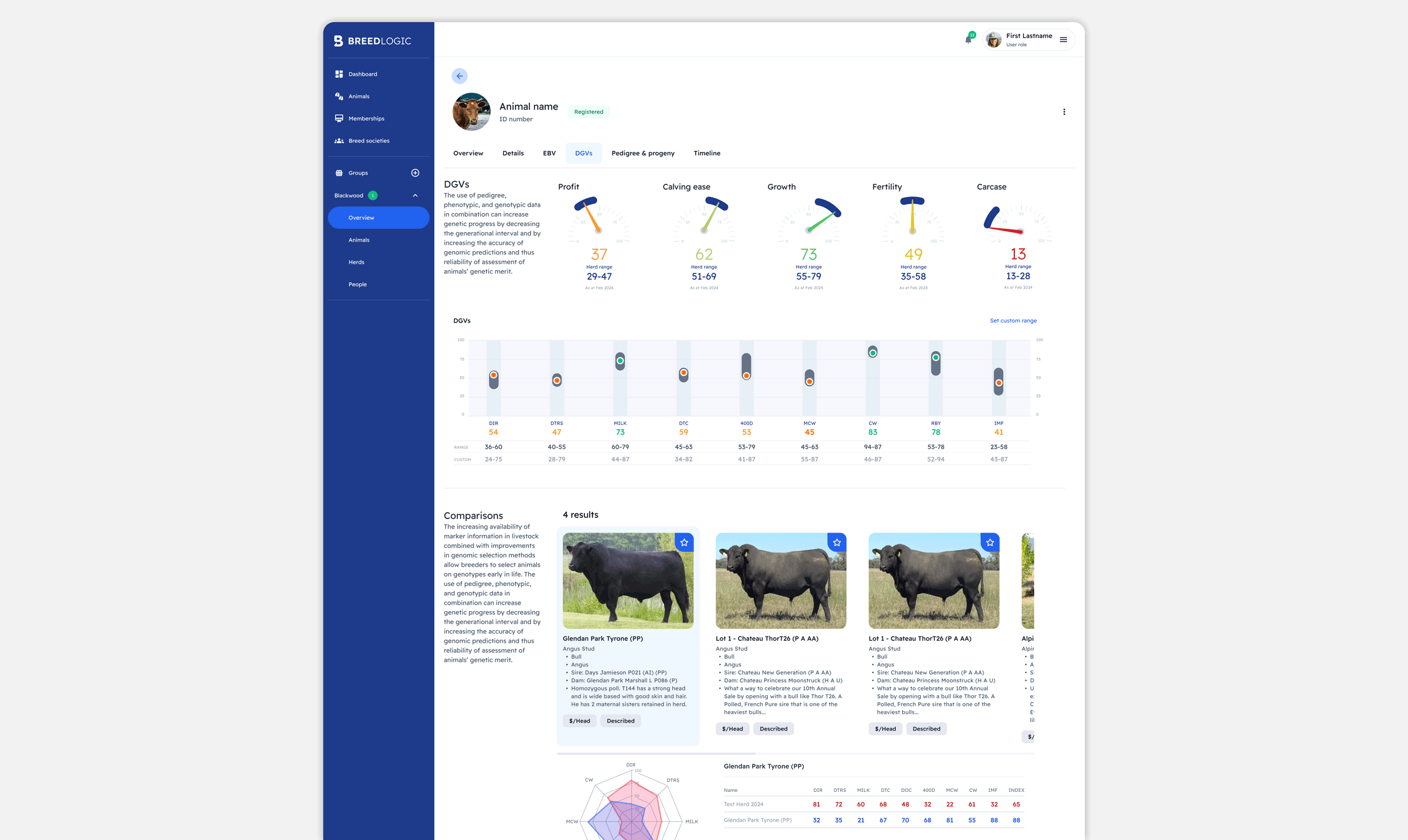
Individual views let breeders inspect the signals behind a potential pairing.
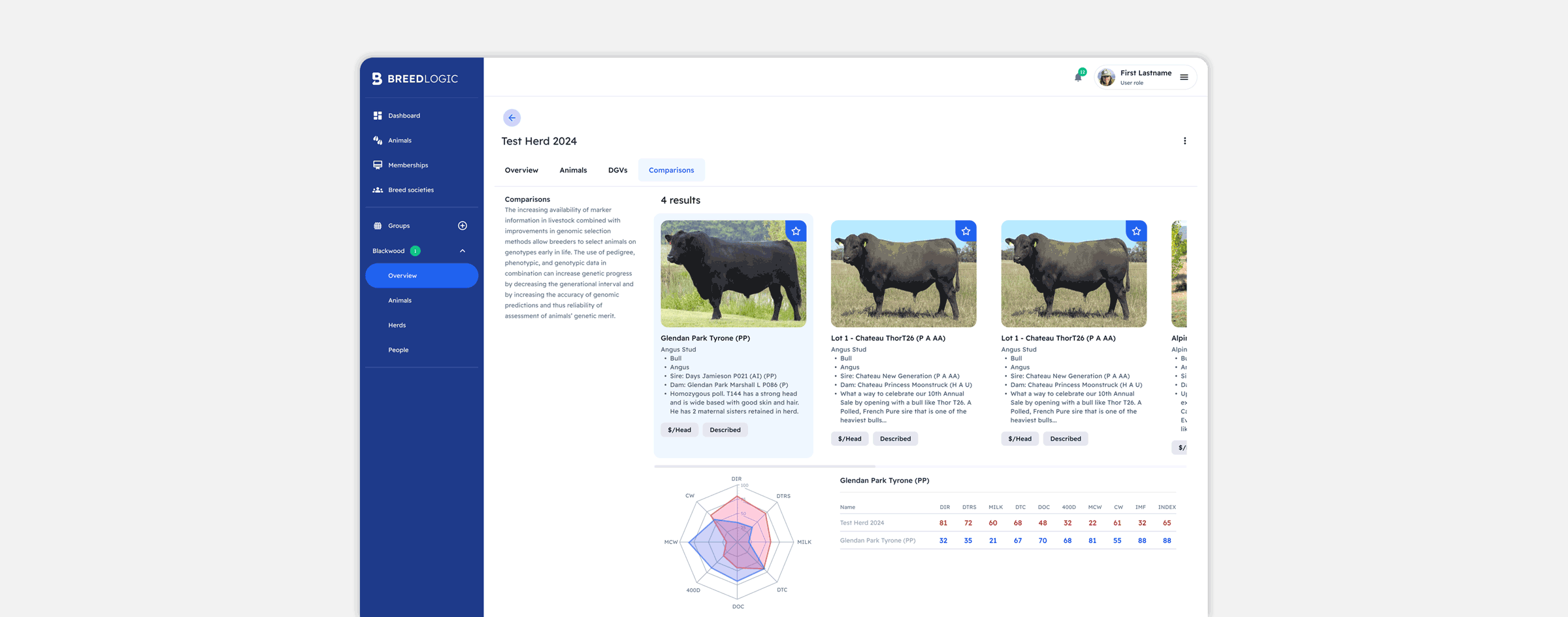
Side-by-side comparison brought likely outcomes, trade-offs, and herd context into one decision view.
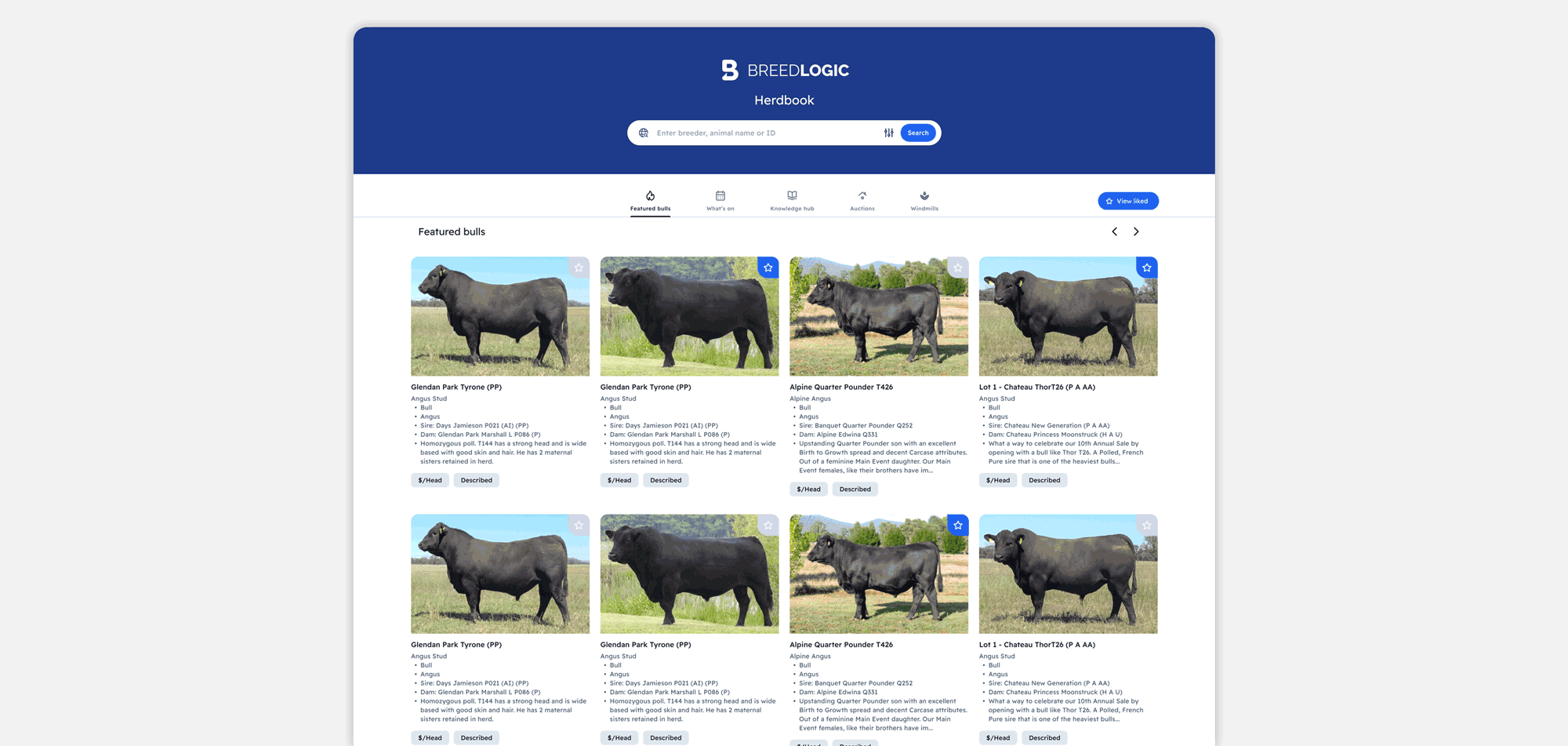
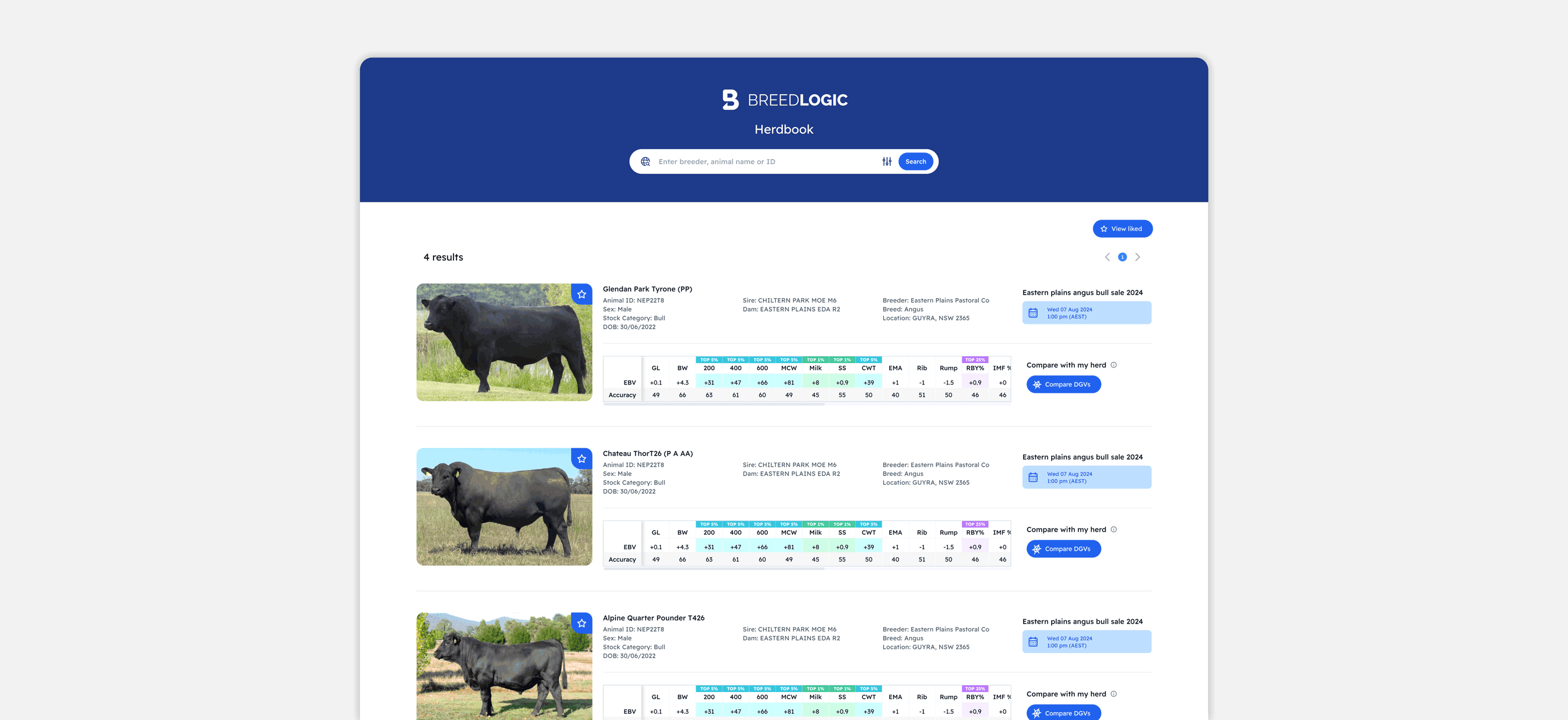
The concepts stayed close to familiar herdbook browsing and favourites behaviour so the AI-supported workflow felt adoptable.
What made this project interesting was not only the AI. It was the way product design could make that AI more usable in a specialist commercial setting.
The prototype established a much stronger direction for how breeders could evaluate mating pairs using predicted outcomes rather than relying entirely on slower, more manual synthesis. It also showed that AI-assisted breeding decisions were more likely to gain trust when they were presented as structured support for breeder expertise, not as a replacement for it.
a clearer product direction for AI-assisted mate selection
a more usable way to compare sires and evaluate likely offspring performance
stronger visual support for balancing multiple breeding traits at once
a UX model that treated explainability and trust as central to adoption
a scalable foundation for future genetic and AI-driven breeding tools
This project sat in a genuinely interesting space: highly technical modelling with very practical on-farm and commercial implications.
That meant the UX work had to do more than make the interface clean. It had to help breeders move from complex data to confident action. It had to bridge genetics, AI, and real-world breeding goals without flattening the nuance that breeders actually care about.
That is where the design value sat.
BreedLogic reinforced that advanced prediction only matters when it becomes usable in a specialist workflow.
The strongest lesson from the work was that specialist users will engage with AI when it helps them think better, compare more clearly, and decide with more confidence. They do not need the product to pretend the machine knows everything. They need it to help them bring together data, expertise, and judgement in a more workable way.